
|
| Home Page | Comments and Greetings |
|
Military | Basic Samoan | Travel |
|
Got a hint? You're welcome to submit news ideas. 

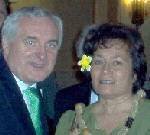
Amata Aumua and Ireland's Prime Minister Bertie Ahern. At the White House Shamrock Ceremony, Ahern presented the Irish shamrock to President Bush to symbolize in a very special way the bonds between the Irish and American people. Following the ceremony the White House held a reception with an elaborate spread of food and drink to celebrate Saint Patrick's Day 2007. Said Amata, "Speaking as a proud Samoan with a wee bit of Irish heritage, it was truly an honor and I thank the President for including me." 
|
Press Releases_
|
|
Reprinted from The Sunday Post
SAMOA POST: Aumua Amata makes it official
August 29, 2010
Aumua Amata has announced that she officially registered as a candidate for Congress last week and the Election Office has verified and confirmed with Aumua that her required documentation is in order and her candidacy is now official.
Said Amata, "I humbly thank the registered voters of American Samoa for signing a petition to nominate me for Delegate in Washington, D.C. I have been a candidate before and some of our people have even voted for me by placing an 'X' next to my name on the election ballot. For that, I thank you from the bottom of my heart."
She added, "Once again I am seeking to become American Samoa's Delegate to the United States House of Representatives and I come before our people to ask for their vote and support. I want to work closely with our local leaders so that we speak with one united voice before Congress. As I have done before when I worked for the U.S. Congress for ten years, I pledge to work across party lines with the elected leaders on Capitol Hill to ease and reverse our serious economic crisis and give hope to our young people through the creation of jobs and increasing educational opportunities to be a competitive 21st Century workforce here at home and anywhere they choose to work.
The caliber of our youth is high and we leaders must provide the shoulders for them to stand on. That is what my candidacy is all about. I am convinced that we can make a positive difference for all our people with full-time Washington representation that focuses on our needs. If we change the way we do business in Washington by promoting and protecting our territorial interests where it counts the most -- inside the U.S. Congress -- we can get the job done."
Election Day across the United States and in American Samoa is Tuesday, November 2.
SOURCE: www.talanei.com TALANEI: Local News
Manu'a residents take advantage of visit by Flying Doctors
08/12/2010
Many Manu'a residents turned out to get dental work and other free medical services offered by Flying Doctors of America earlier this week.
A six-member team from Flying Doctors of America served a steady number of patients in Manu'a for the three days they were there. The team included two physicians, a dentist and two dental hygienists.
Dr. Jerry Batten explained the dental cases they handled while in Manu'a.
He said their hygienists also performed some scaling for teens and adults with periodontal diseases and also conducted educational awareness.
He said there is a big need for dental services in Manu'a as there is really no ongoing dental presence there.
Dr. David Scurlock and Dr. Jolene Montano saw serious cases such as diabetes. Dr. Scurlock explains their role during the medical mission.
Dr. Montano said the pharmacy in Ta'u has very limited medication available so what they did was give patients minimal supply and a prescription for them to get more medication later.
Aumua Amata, who escorted the team, said once they arrived in Ta'u on Monday, they boarded two alias for Ofu and Olosega. She said the channel was very rough so the medical team had quite an experience going to Ofu and Olosega. The team spent Monday serving residents there before returning to Ta'u.
Amata acknowledged the support of LBJ Hospital and the Department of Health who had a team go with the Flying Doctors to Manu'a. She also gives credit to the Office of Samoa Affairs for their assistance in coordinating with the village mayors there in order for residents to be aware of the medical mission.
The Flying Doctors team returned yesterday and this morning, they were treated to a lavish brunch by the Tafuna Health Center.
Dr. John Tuitele, who heads the center, thanked the doctors for their dedication, time and assistance to residents of American Samoa.
He also thanked Amata for being instrumental in bringing the Flying Doctors to American Samoa.
The lavish brunch by the Tafuna Health Center is part of activities celebrating Health Center Week. Throughout this week, each division of the health center provides breakfast for patients.
Aside from the team that went to Manu'a, another group of Flying Doctors of America have been seeing patients since Monday at the LBJ Hospital
RNZI: Flying doctors to deal with most critical cases during American Samoa visit
The organiser behind American Samoa's very first visit by the Flying Doctors of America says the team has been specifically chosen based on the needs of the territory.
The group of 12 from the volunteer organisation, which sends physicians, surgeons and dentists to places in need, will arrive in American Samoa on Thursday for a ten day mission.
The coordinator, Aumua Amata, says the medical specialists will be dealing with the most critical cases.
"It's really just all about providing the medical assistance and hope to out people. We are particularly excited that we're going to be taking them to Manu'a, which is our outer islands which have had transportation problems and trying to get equipment and logistics straightened-out out there, has been a challenge."
Radio New Zealand International
PO Box 123, Wellington, New Zealand
The Flying Doctors of America are here
Friday August 6, 2010
By Teri Hunkin
terihunkin@samoanews.com
The Flying Doctors of America have flown to American Samoa. For the first time in their twenty year history, the humanitarian, non-profit organization has ventured into the South Pacific, although their medical missions have taken them into some of the most remote and impoverished regions of the world.
Scheduled to arrive last night on Hawaiian Air, the roster of eleven doctors, nurses and technical aids have a full schedule ahead of them.
Their mission, as stated front and center on their website, is "to provide medical assistance and hope to as many of the poor and needy as we are able to reach. We fly medical and dental teams to wherever the need takes us."
The need for medical and dental care and expertise which they can provide has brought them here… and it was because of the determination and concern which one woman held for her people - that they learned of that need.
It was at the invitation of a "very special and very persistent lady" that six months ago, Dr. Allan Gathercoal, the founder of the Flying Doctors of America, or FDoA, made his first visit to the territory with his lovely Peruvian wife, LizMarcela.
The lady who had first reached out to him and his organization was Aumua Amata, and while she sought no recognition for her efforts, Dr. Gathercoal made it known that his organization would consider the mission, and it was because of her.
"It was her follow-through that got us here." he stated.
On his first visit in February, this year, Dr.Gathercoal (who prefers to be called "just Allan") met with LBJ and DOH administration, spoke to doctors, nurses and members of emergency teams. He himself worked in emergency medicine at Loma Linda University, while his doctorate degree is in divinity (philosophy and theology) from Columbia Theological Seminary.
He promised after that first visit in February that he would bring members of his group, the "Flying Doctors of America" back with him this summer.
True to his word, Dr. Gathercoal arrived in the territory last week just ahead of this group of eleven doctors, nurses and technicians who hail from all parts of the United States. They are among the more than 7,000 volunteers on the roster for Flying Doctors of America, an organization which was founded by Gathercoal "on a wing and a prayer with $700 in his pocket" some twenty years ago.
The FDoA organization, according to the website, brings together physicians, dentists, physicians' assistants, nurse practitioners, registered nurses, pharmacists, and other volunteers who give medical and dental care to people in developing countries throughout the world.
All of the missions are short-term (one or two weeks) and professionally managed. "We were the first team representing the United States on the ground in Haiti following the terrible earthquake" said Gathercoal. "We are first responders who pride ourselves in being first into difficult places where the need is most urgent."
He continued, "These team members are amazing, they are extremely flexible, and they can sleep under the stars in Samoa, or bring their skills to war-torn places at a moment's notice."
They were one of the first teams responding to Thailand after the great tsunami. "These people leave their busy practices to care for those in need" said Dr. Gathercoal.
The Flying Doctors of America was a group which Aumua had followed for years - as one which may have been able to help with some of the territory's medical needs. She was - more than anything— concerned with the lack of medical care in Manu'a.
In September 2007, Aumua first contacted Dr. Gathercoal.
"I had been tracking them for years, and I was stunned at the level of their humanitarian outreach," said Aumua. "Dr. Gathercoal was on a medical mission, somewhere in the Himalayas, I believe, when I first tried to track him down, but when we finally made contact, he was very interested in learning more about American Samoa's needs for both medicine and dentistry.
"The Flying Doctors agenda and itineraries are set years in advance, so we looked at August 2010 as a good time for them to arrive. Because many of our doctors and government workers leave to go on vacation in the summer, the need for medical help is often greater at this time, so it fit perfectly."
In February, Dr. Gathercoal came to see where the needs were greatest, and has worked to bring specialists here who we may not be able to see at other times.
Beginning this Monday, one team will be doing surgeries in conjunction with the ear, nose and throat clinic. More than 20 surgeries are scheduled at this time, which include two surgeries to repair cleft palates. Dr. Linda Gage White, who is traveling with the team is a cleft palate specialist.
At the same time, another team will fly to Manu'a. In Manu'a, where they are working closely with Dr. Malo Tuiolosega, there will be a full dental component along with an OB/Gyn doctor and an internal medicine specialist. "Secretary of Samoan Affairs Tufele has been very helpful from the beginning, as well as Manu'a District Governor Misa" said Aumua.
The Manu'a team is scheduled to return on Wednesday, and on Thursday they will then begin to conduct outreach clinics at the DOH satellite centers in Leone, Tafuna and in the eastern district, Amouli.
Dr. Tuiasina Laumoli, Director of Health noted that this is a rare opportunity for us here. "We are fortunate to have them assist DOH by sharing their information and medical expertise, and we welcome them wholeheartedly" he said.
For those who are interested in seeing the doctors regarding ear, nose and throat matters, they are encouraged to contact the ENT clinic through the hospital’s main phone line 633-1222.
A sleep specialist - Dr. Rao Mikilneni, a pulmonary doctor whose work is centered on obesity and obesity-related sleep problems particularly sleep apnea - will be here working closely with Dr. Alo Anesi, who is helping to coordinate the visit for internal medicine.
Dr. Anesi informed Samoa News that they are still taking appointments, and to please call the medical clinic if you have questions, or would like to see one of the specialists.
Two of the doctors will also be presenting to the LBJ medical staff when they have completed their surgeries, according to Dr. Ernest Oo, who is also head of continuing education at LBJ.
The members of the team who are here include David Luke Shellenberger (MD ENT), Linda Gage White (MD ENT), Jolene R. Montano (MD OB/GYN), David Ross Scurlock (MD FP), Rao Mikilneni (MD Pulm), Deb Morse (Surgical Tech), Georganne Long (RN), Jerry Batten (DDS) Jo Ann Chambers (Dental Assistant), Jennifer L. Hair (RDH), Clair Fox White (Triage RN).
Michael Gerstenberger, Chief Executive Officer at LBJ has said of the team, "LBJ is delighted to welcome our friends from the Flying Doctors of America. They have come to share their skills with our patients, their knowledge with our staff and their caring with the entire American Samoa community. We are very gratified that these busy professionals would come this distance to help us help the residents of our small islands."
Aumua Amata's Guam jobs relief initiative continues to do well
June 3, 2010
PAGO PAGO. Aumua Amata today updated the people of American Samoa on the status of her Guam Job Relief initiative which has been well documented in the local media for the past year.
She said, "To recap, in May 2009 when Chicken of the Sea/Samoa Packing announced it was closing its doors, I contacted friends and business associates in Guam and the mainland to find out whether they could accommodate our displaced unemployed workers with no employment prospects on the horizon. In evaluating the workers' profiles, we discovered that many of them already had construction trade skills but had became commercial fish cleaners in order to support and feed their families. From the outset I kept the Director of Human Resources Evelyn Vaitautolu Langford fully apprised of all developments in the Guam project and she was very helpful,communicative and always made time for me. I want to thank Director Langford for working with me. From the very beginning, she "got it" and I am excited that she is pursuing plans to help our people get off-island employment in Guam on a temporary basis because jobs are needed as things continue to unfold in the matter of the impact of the accelerated U.S. federal minimum wage on our territory."
Continued Aumua, "In December 2009, when I updated our people on my Guam Jobs initiative, the timetable for the relocation of the U.S. military from Okinawa to Guam was temporarily put on hold at the request of the new Japanese Prime Minister who asked "for a few months" to review the agreement made by the U.S. and the previous Japanese administration. The Japanese prime minister eventually did resign because he could not convince the U.S. not to move the Air Base from a congested part of the island to a less populous area of the island. Moreover, the vast majority of Okinawans want the U.S. military to remain on their island---it is good for business."
"Since December," Amata added, "I can report that a lot has been happening in Guam and I have been working closely with Professional Personnel International's Darrell Ferguson of Houston and David J. Sablan of Guam to secure jobs for our local people. Just last month, seven Mega-MACC (multiple awards construction contracts) contractors were selected to henceforth participate in the bidding process for the MACC projects which will total approximately $1 billion per year over the next five years. These seven contractors, when awarded various task orders for the MACC projects, will be the Prime Contractors as viewed by the US Naval Facilities Engineering Command (NAVFAC), which is the contracting office for the US Navy and Marine Corps. Aumua was employed by NAVFAC in Guam while she was a student at the University of Guam. It is important to mention the names of these Prime Contractors because everything will flow through them: Kiewit-Mortenson JV, dck pacific-ECC JV; Hensel-Phelps, Traylor Bros. and Granite Construction; Guam MACC Builders JV; Core-Tech International, SKEC and AMEC JV; Black Construction Corporation-Tutor Perini; CNMS."
Amata added, "Employment prospects are exciting. There is much to be resolved after which they will be getting the workers lined up. In 2009 I emphasized to our Human Resources Director the importance of getting our people re-trained for construction jobs in Guam. Since last year, there was plenty of time to make that happen and of course, the U.S. Department of Labor NEG grants are very helpful. The Mega-MACC prime contractors are well aware of the Samoan workers, with their positive morale and high quality of output ability. We have estimated that perhaps 400-500 American Samoan workers are ready to come to Guam, according to their skill level profiles evaluated by PPI Guam. Others will have to be retrained via the Jobs Corps Program."
Aumua Amata concluded by saying, "I have been told by tuna cannery management that the labor force in American Samoa is one of the best because it is comprised of motivated, hard working people grounded in traditional Christian family values with a special spirit of family interconnectivity that makes the American Samoa worker a highly prized individual for projects such as the massive work that is soon to be undertaken in Guam. For these reasons, it was easy to go to bat for them. As "hands on" workers, they have a serious respect for authority, they take orders well and give orders very well, too. May God bless American Samoa and its workers."
For those individuals who are interested in applying for a Guam job, Amata is still collecting and processing application forms. One may pick up and drop off the application form at Shalhout Store in Atu'u across the street from the Samoa Packing plant and also at Triple SSS Service Station on the Airport Road in Tafuna. For further details, feel free to contact Aumua Amata directly by email "aumua.amata@gmail.com" or call her at: 258-8376.
AMATA: "I will run again."
Reprinted from Samoa News
May 4, 2010
Former congressional candidate Aumua Amata yesterday announced she is throwing her hat in the ring for this year’s race for American Samoa’s Delegate to the U.S. House in the November general election.
Amata's official announcement of her candidacy:
Talofa and warm greetings to our beloved people of Tutuila, Manu'a, Aunu'u and Swains. I am Aumua Amata. Some of you know my name. You have seen it before in past elections. You may have even voted for me before, by putting a check mark next to my name on our election ballot. For that, I thank you very much.
Once again, I am seeking to become American Samoa's Delegate to the U.S. Congress. Today I come before you to ask for your support and vote. I also ask you to send me to Washington, D.C. Let me tell you why.
American Samoa is in a serious economic crisis. Many of our friends and relatives have lost their jobs in this crisis, because without consultation with our local leaders, the pillars of our territorial economy got kicked out from under us.
How did this happen? It happened because of a failure of representation in Washington, a failure to act, a failure to promote and protect our territorial interests where it counts the most— inside the U.S. Congress.
Our territory is now without a major source of jobs. The loss of those jobs has put our economy in bad shape.
A serious situation requires a serious solution. That solution is change.
We must change how we do business in Washington.
We must change because our current lack of representation in Washington has caused a severe setback for our territory and for our future development, including job opportunities for our Youth.
Again, a serious situation requires a serious solution, and only you can get the ball rolling to make the necessary changes.
Therefore, today I am announcing my candidacy for the office of the Delegate to the U.S. Congress.
And I humbly ask you for your support and vote on Tuesday, November 2.
To make those changes we need so badly, I am asking you to send me to Washington to represent you.
If you elect me, I will work closely with the Governor and the Fono to get our beloved territory back on track for the benefit of all our people. I will seek their wise counsel and assistance in setting American Samoa's agenda in Congress.
If elected, I promise no miracles but I can guarantee a lot of long hours of hard work to ensure and protect the future of our people, our youth and our homeland.
So, again, I ask you for your support and vote on November 2.
Soifua ma ia manuia.
AUMUA AMATA
To contact Aumua:
Phones: 684-258-8376 and 684-770-2537
Address: P.O. Box 1178 Pago Pago AS 96799
Email: aumua.amata@gmail.com
Websites: www.facebook.com (Friends of Amata),
http://www.amata.as (AUMUA AMATA FOR CONGRESS),
http://groups.myspace.com/friendsofamata
http://www.bebo.com/friendsofamata
http://www.bebo.com/AmataA55
http://www.myspace.com/amataaumua
http://www.twitter.com/amata96799
What Samoa News readers are talking about:
| Your Friends and Families in Minnesota wrote: | 04 May 2010 03:33 PM | Wooohooo.American Samoa's well deserved Congresswoman Aumua Amata.You have our support 100%.We love you....AMATA FOR CONGRESS. |
| T. N. Galea'i wrote: | 04 May 2010 03:06 PM | Talofa Amata, I was excited to hear that you are running again for Congress. My mom Lea Galea'i supported you for years and although she passed away last year, we are carrying on that support. Sometimes we take a long time before we decide what we want and it has taken us a long time but now the support for you is there because we know your love for us is genuine. A lot has happened in the last two years. First the tsunami followed by Samoa Packing closing two days later then the federal minimum wage which was supposed to be good for us but it ended up killing our jobs. What was our Delegate thinking? I congratulate you on your undying desire to serve our people. What a difficult challenging task that is. You've been down here for a long time and it allowed us to spend more time and get to know you better. I think you are ready to represent us in Congress and I pray to God that it will happen. We need you so much. Blessings on you and your husband Fred and three children. Love always. |
| Anonymous wrote: | 04 May 2010 02:37 PM | How about if we select ENI as Governor and AMATA as congress... |
| Perseverance wrote: | 04 May 2010 02:11 PM | Great! I'm hoping the people of American Samoa open their eyes and see the serious need for change. You can count on my vote! |
| New York wrote: | 04 May 2010 02:05 PM | We need change and it's time for that change. Eni, your are getting rusty in Washington. Amata, you got my vote. |
| WOW wrote: | 04 May 2010 01:19 PM | I take it this is not a re-elect Eni forum... |
| ed wrote: | 04 May 2010 12:48 PM | Dear Amata , I wish you someday to be our next leader in Congress, But , Eni is doing a great job in Washington. He is already established in the ranks and file in congress. He knows how to make deals in congress . He has life time experience. Please , make it easy for us and sit this election out till He ready to retire. Thank you . Eni is good for American Samoa. |
| Malo Lava le Tina Toa o Amata wrote: | 04 May 2010 08:41 AM | Congratulations Amata on your decision to step into the ring again. Remember I told you to just do it. I admire your gutsiness and determination to serve. Our people are fortunate to have someone who cares so much about their needs and issues. Love you lots, Pago Girl from the Fagaloa. |
| Bruce J. Coleman wrote: | 04 May 2010 08:14 AM | Congratulations, Amata!! You are strong!! I believe this quote describes why I have so much respect for you and your persistence to help our people: "Respect is a recognition of inspiration, purpose and competence." ---L. Ron Hubbard You are inspirational first to all island women. They provide real Love only a mother is blessed with by the Almighty. Your works have shown above and beyond how much you love and care for our island people. You provide a Purpose that all islanders aspire to: to be the best in providing for our island people those things which will bring out the best in our people i.e., education, leadership and service. Third, you have been of service to all those you have helped for many years. This speaks volume of your competence. But what I admire most about you besides being my sister is the Island in you: your smile, your sense of humor, your care, your feistiness, your strength, your conviction of belief in doing the right thing and most of all your Love. We are given this opportunity NOW for your leadership. WE MUST TAKE ADVANTAGE OF IT NOW!! I see it as a Leadership that is required to put prosperity back into our island hands and in our hearts. I believe our island people are ready NOW for your Leadership. I believe the island people need to know only ONE thing from you and that is: YOU CARE!! This has been true for me!! WE LOVE YOU!! You have our support!! May God guide and walk with you side by side and bless us as the next American Samoa’s Delegate to the U.S. House in November!! Best, Your Brother and his family, Bruce, Vickie, Michael, Heather(Michael's wife) and Alithea Coleman |
| Moni M. wrote: | 04 May 2010 07:13 AM | Hey Amata. Yah done us proud, girl. Congratulations and love from all of us. |
| We salute you Aumua Amata wrote: | 04 May 2010 07:10 AM | We are with you all the way, Amata. So glad you did not give up on our people and islands. Cheering you on from Nuuuli. You are a strong, honest, brave leader and my wife and I salute you. These are your two votes. |
| Charles Ulualofaiga Coleman wrote: | 04 May 2010 05:09 AM | Mataupu Fa'ale-Malo a le Motu o Fiafiaga Talofa Sis (Amata) ma le faaaloalo lava, I read about your candidacy from the military newsline at the Los Angeles Air Force Base, California. Hoah! Malaea, Afele, Kolini, Ulualo, Peniamina, Uialii, and me extend our fondest congratulations with our traditional faaSamoa hugs and kisses! (mili, mili, mili, pati-po, pati-po,shoohoo!) As I continue to serve our Great Nation of America in a Civilian capacity, I will always be proud of your dedication, passion, and courage for stepping up and taking responsibility to lift American Samoa and its Youth up to its rightful place amongst the Pacific island nations. We deserve better and every person of Samoan ancestry shall stand tall and tautua because we are proud of our Culture, Heritage, and the FaaSamoa Traditions. Consider EDUCATION, EDUCATION, EDUCATION -- in that order -- as one of your goals for our gifted people of(Amerika Samoa) and our talented Youth. Ia muamua le Atua i mea uma lava. May God Bless and Guide You throughout the campaign days ahead. Alofa tele, Charles, your brother and proud veteran (USARMY, AIRBORNE, SPECIAL FORCES) |
| I will cast my vote for Aumua Amata wrote: | 04 May 2010 02:37 AM | I am a vig fan of Amata and I have been waiting for her to run for Governor just like her Dad. Since that race is not happening, I am excited that she has decided to go for Congress because that is really where her professional expereince is. I am in the military and will cast my vote for you Aumua Amata. |
| I support Amata all the way to Washington wrote: | 04 May 2010 02:30 AM | I am a 29 year old male from Fagatogo who never bothered to vote because I felt it was a waste of time. I will go and register to vote because I want to give Aumua Amata a chance to help our young people. They need hope and they need a job just like me. I talked to her one day when she was checking her mail at the post office and I like what I heard. Yes Yes Yes! |
| We support Aumua Amata wrote: | 04 May 2010 02:23 AM | My husband Paul and I are so very excited to have the chance to support Amata for Congress. He thought she might not run. Thank you Amata for all you do for our people here in American Samoa. We love your spirit. We love your energy. We love the way you inspire our young people with your perseverance and patience. You are one strong Lady. |
| VOTE FOR AUMUA AMATA FOR CONGRESS wrote: | 04 May 2010 02:18 AM | Choo Hoo Aumua Amata. I have been in the U.S. Army for fifteen years and this is the first time I will be voting for you. Why? Because we need a change. There has to be something better out there than what our people have been getting so far. Sorry Eni. It's Amata's turn this time. With Amata's official announcement I am now an ex-supporter of yours. You have earned your right to rest. Thank you for the memories but it's a new day and a new time and it's time for someone fresh and eager to serve. It's about Aumua Amata for Congress. |
| You have my family's 8 votes, Aumua wrote: | 04 May 2010 02:11 AM | Congratulations American Samoa. You have been given a chance by God to elect someone to Congress who cares about you deeply and will work her heart out for you. My whole family in Amouli is for you, Amata. We love you!!! Malo Afua ailao ua maua. |
| O oe o le Tina Toa mo le Laumua, Aumua! wrote: | 03 May 2010 11:51 PM | Thanks be to God! You have answered me and my family's prayers, Aumua Amata. Finally you have spoken and many of us are truly happy you are running this year. My family, village and I have waited for your decision to run and we will do our part to get you to the White House. We prayed hard that we wanted you to run again. Your compassion and passion for our needs shines through all these years that you have run. You never abandoned us all these years. You have done so much even though you never held the congressional seat. This year you deserve to be in Congress. You have earned that I believe. At this moment I am crying tears of joy for you Aumua Amata. You are the answer for American Samoa this year. I believe that with all of my heart and soul. I know this must have been a difficult decision but God spoke to your heart Amata. It is time to take your rightful place as our leader who really cares about us. GOD BLESS YOU AUMUA AMATA. AMERICAN SAMOA LOVES YOU. |
Aumua Amata: "You don't know what you got 'til it's gone"
Reprinted from Samoa News
Friday March 26, 2010
Last Sunday as I drove through Utulei I noticed Yacht Club people packing up to vacate the building and it made an impact on me.
In life we take many things for granted and sometimes we realize how good something really was only when it is no longer there.
Over the years, the Pago Pago Yacht Club has had its share of enthusiasts and detractors. All in all, the good outweighed the bad and I for one believe it was an asset to our local community and Territory. Here are just a few reasons why:
All past Samoan Governors beginning with Gov. Tali Peter Coleman and including Governors Lutali and Tauese supported the Yacht Club and each of them helped it to survive. Governor Owen Aspinall even served as its Commodore while he was in office.
Governor Togiola is also on record as clearly championing our youth, and now, more than ever, they need his support.
The Pago Pago Yacht Club allowed us to be recognized world wide through reciprocal rights to other American and international yacht clubs. It served as a homing base for off island yacht club members visiting American Samoa.
The many times it was severely damaged by storms, it was always rebuilt with money totally financed by the Yacht Club, never with ASG money. In fact, the recent repairs were paid with its own funds. Its supporters always found the money they needed through car washes, dinners, lump sum donations and other fundraising.
As an active member of the local outrigger canoe paddling team, I feel its location is especially important for our Junior Sailors who outpace any marketing professionals in touting American Samoa because they market us simply by being there with other countries.
Through competition these young people keep us on that radar screen and that is a good thing. They need to be near the water for constant training in their water sports so they can be honed and disciplined and when the time comes, they will bring home the gold for American Samoa.
I sincerely hope another appropriate venue can be allocated for the Yacht Club. This is a good and positive thing for the youth of American Samoa who have so few outlets as it is.
May God bless and keep us all.
AUMUA AMATA
Samoan pushes Ma-Obama meeting
Publication Date: 03/12/2010
Source: Taiwan Today
Amata Coleman Radewagen, the Republican National Committeewoman from American Samoa, hopes to organize a meeting between the leaders of Taiwan and the U.S.
Given that Barrack Obama and Ma Ying-jeou will pay state visits to their nation's South Pacific diplomatic allies late March, Radewagen plans to arrange for an encounter between the two leaders in Samoa.
In a letter to President Ma, Radewagen invited the ROC president to visit the island during his six-day visit of the ROC's Southern Pacific diplomatic allies beginning March 21.
Radewagen noted that considering how close Nauru and Samoa are, she hopes Ma can stop by Samoa after his visit to the Republic of Nauru.
The Samoan said she had a good impression of Taiwan during her previous visit to the island. "Given the many similarities that exist between the aboriginals of Taiwan and those of the South Pacific, it would be a great opportunity for our islanders to learn more about Taiwan's indigenous cultural heritage since aboriginal performing artists are accompanying President Ma on his trip," she said.
House Representative of American Samoa Eni Faleomavaega has strived to invite Obama, who is expected to visit Australia, Indonesia and Guam late March, to visit Samoa during his state visit. Therefore, Radewagen hopes to arrange a meeting of the two presidents by inviting Ma.
Ma's tour of six Pacific allies from March 21 to 27, includes transit in Guam.
Aumua Amata: "U.S. Census Bureau needs to get it right"
Monday March 8, 2010
Reprinted from Samoa News
2010 is the year of the Census and outreach is important. The U.S. constitution says that once every ten years the Government can count people. Of course we want to stand up and be counted but I for one would feel a lot better if the U.S. territories had not been left out on their home page. For example, you go to www.census.gov and they have the States and Puerto Rico on their map. What happened to the other territories, i.e. American Samoa, Guam, the Northern Marianas and Virgin Islands. We are part of the United States and therefore, a part of the Census process, so why are we not listed on their home page's drop down list?
In a way, this little incident summarizes the way the U.S. territories have been treated in the federal process for years: as an afterthought. Almost every action taken to include the territories has to be done "manually" because it's never "automatic." So, it's a never ending process of reminding the Feds that we exist and who we are.
Because Pacific Islander numbers are way down, it was suggested that I might want to reach out to people in different ways to encourage them to fill out their Census form. And I will do that. Taking the Census is a huge, tedious project and 'we the people' need to be as helpful as we can.
The U.S. Census Bureau also needs to do its part.
During the last tsunami scare, CNN incorrectly reported that Hawaii is located four thousand miles away from Hawaii's actual location. OK, granted that misstep is unrelated to the Census but this is CNN we're talking about. They actually mistook the Galapagos Islands for Hawaii and I was asked by someone from the nation's capitol, "Isn't American Samoa part of Hawaii?"
I encourage our people to fill out your Census form when the time comes.
Additionally, the Census Bureau needs to list us along with the States and Puerto Rico on the Census.gov site's map and other appropriate places on their home page. We're not asking for a special favor. We actually belong there. Include us please.
Hopefully by the time this is published, we will already have been listed. I for one will feel much better.
Aumua Amata
Source: Samoa News
The heroes among us� Flying Doctors of America Thursday February 18, 2010
By Teri Hunkin reporters@samoanews.com
There are heroes among us. Very often, they are quiet and unassuming people who labor day in and day out to care for others; they are the "Mother Teresa's" of the world - sometimes they are hospice workers, other times they are family members who put their lives on hold to nurse someone back to health, or to stand by them through the end of their days.
But once in a while a larger than life hero comes along; ornery, flamboyant and engaging, this one has your attention immediately.
Persistent, tenacious, some would say "stubborn" - he would most definitely NOT want to be called "hero" ... but what else do you call someone who had a burning desire to help his fellow man - taken straight from the words of Jesus - and with a paltry $700 and a grain of faith began an organization that has served hundreds of thousands of people on medical missions of mercy on nearly every continent around the globe for over 20 years?
Allan M. Gathercoal, the president and founder of Flying Doctors of America, will make you rethink your life as he tells you about his.
Saying he began the Flying Doctors "on a wing and a prayer" Gathercoal's passion and enthusiasm for his ministry is evident.
It was Ralph Waldo Emerson who said, "nothing great was ever achieved without enthusiasm". It is Gathercoal, and his Flying Doctors of America, who are living proof that is true.
The non-profit, non-sectarian organization begun by the visionary Gathercoal has to date flown nearly 300 missions and provided free medical care to more than 200,000 children, women and men in some of the world's most remote and impoverished places.
While their vision is broad, the FDoA's mission statement is simple: "to provide medical assistance and hope to as many of the poor and needy as we are able to reach."
And reach out they have: among the areas they have served are Mexico, South America, Central America, the Caribbean, India, Africa, South East Asia (Thailand, Vietnam, Cambodia), China & Mongolia.
In August this year, they will add the South Pacific to their list, as the group will fly in with a team of 20, including medical doctors, dentists, nurses and technicians to work in the islands of Tutuila and Manu'a.
DR. GATHERCOAL'S STORY
Samoa News caught up with Dr. Gathercoal and his lovely Peruvian wife LizMarcela this past weekend at Ta'alolo Lodge, where they are busy meeting with doctors and directors, as well as coordinating their next several trips, including the trip to American Samoa this summer.
Gathercoal revealed a past riddled with irony; he had been a soldier in Viet Nam "dedicated to destroying" - yet he wound up here, a minister, medically trained, and a pilot, dedicated to healing.
How did this transformation take place? Gathercoal stated without hesitation, "God interrupts people's lives."
While Gathercoal was working on obtaining his hours and certification for a pilot's license in Viet Nam, Nixon began to wind down the war. Several flight schools were closing, and Gathercoal found himself searching for a place to finish his tour of duty.
Stating firmly, "There are no coincidences!" he spoke of walking into the office of two army Chaplains: McRoberts and Fingers, one a Presbyterian, the other a Lutheran.
It was, he admitted, an unlikely place for him to have been assigned. A kid with a lot of 'street cred' he said "Up till then, the only time I prayed was when I saw the police coming."
Not one to mince words, he then declared, "Getting stuck in that office was a gift from God. It was because of His goodness - the Providence of God - that I was set on a different path."
"I was clueless about Christianity" he says, "until that time."
What changed him? He will tell you straight up: "It was the teachings of Jesus ... Jesus was all about healing, wholeness and hope ... and so it became the foundation of my ministry ... when I read the 25th Chapter of Matthew wherein Jesus said, "Whatsoever you have done to the least of these, my brethren, you have done unto me" ... I knew that I had to go from the life I had lived (a soldier, trained to destroy) to a life of caring for others."
He explained, "You cannot come away from those words - the admonition of Christ - without wondering how your life needs to change."
Gathercoal left the army believing he wanted to go into medicine. Working at Loma Linda Emergency room while taking pre-med classes at Cal State, he left that to go into active ministry. Eventually, he would build a church, earn graduate degrees in Psychology and Theology, and obtain a doctorate from Columbia Theological Seminary.
In 1996 he received the "Vision of Race Unity Award" an honor bestowed by the Baha'i community on those who fight prejudice in our world. He has also pioneered businesses and educational programs, and taught Leadership Development at Emory University.
But above all, it is the Flying Doctors of America that consumes him. Stating flatly, "a ministry needs to be more about practice than proclamation ... it needs to be about doing what we believe versus talking about what we believe ... the true ministry of a church is always outside the church ... Christ�s ministry was outside the walls of Jerusalem ... I knew as I read the scriptures that I had to move from killing to caring - I needed a serious retraining from my former mindset ... it was a total reprogramming for me."
How does one go from destroying to healing - actions at the opposite ends of the spectrum of human behavior? Said Gathercoal, "the whole kernel - the idea for the Flying Doctors - really came from the Bible. As Christians, we are called to care for the less fortunate. To be a Christian and be indifferent to suffering is anathema ... it is simply not possible."
That was 35 years ago, and looking back, Gathercoal said, he realized that at each turn, the hand of Providence was there.
FLYING TO AMERICAN SAMOA
The FDoA plan their calendars years in advance. What put American Samoa on their calendar was the question posed to Gathercoal, who is himself trained in emergency medicine.
"It was Aumua Amata who first contacted me."
Amata, in conversation with Samoa News, said, "The credit doesn't go to any one single person ... it was a collaborative effort. These Flying Doctors are people with tremendous compassion ... their level of outreach around the world is stunning."
In 2008 Amata called Dr. Gathercoal (who was on a medical mission at the time) and since then, they have kept in touch by email.
Amata then contacted Patricia Tindall, who was LBJ's CEO, and she noted, "Patti immediately saw the impact that they could have. She was very positive about the idea, and offered to help in every way possible to make it happen."
"Because The 'Flying Docs' were already booked up in 2008 and 2009, this is the first chance they have had to match up our needs with their medical expertise" said Amata.
Dr. Gathercoal and his wife Liz have flown down at their own expense to see how they can help us, and they have scheduled us in for August.
"This is FDoA's introduction to the South Pacific region and we're hoping they will make this an annual medical mission," she noted.
Gathercoal, whose medical ministry includes a roster of 4500 MDs, 1500 dentists, 1500 RNs, Physician's Assistants (PAs) and Nurse Practitioners to call upon - along with about 1500 support staff (Chiropractors, pharmacists, and medical technicians) - is considering establishing American Samoa as a Flying Doctors of America base for the South Pacific region.
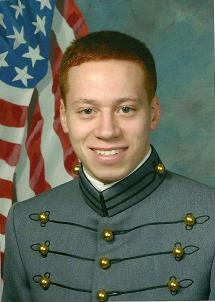 American Samoan West Point Cadet Stewart Coleman-Glenister heads to Beijing University
Reprinted from Samoa News
Saturday, January 16, 2010
Stewart Glenister, the youngest son of Limonmon Coleman of Pago Pago and Ret. CSM Tuaua Roland Glenister of Nuuuli, embarked on an adventure to China last week. The cadet, who is pursuing a mechanical engineering degree at the U.S. Military Academy, West Point, N.Y. was selected to study Mandarin Chinese at the University of Beijing. Stewart, who has strong ties to American Samoa, is the paternal grandson of Mrs. Naijo Nomura Belford and Roland Glenister Sr., and the maternal grandson of the late Gov. and Mrs. Peter Tali Coleman.
In 2008 Glenister, who is a member of the Army swimming and diving team for West Point, and whose parents and grandparents were born and raised in American Samoa, earned a spot on American Samoa�s Olympic Swim Team and went on to win his heat in Beijing.
While meeting and becoming aquainted with many Chinese friends during the Olympics, Glenister developed a keen interest in Mandarin. When he was selected by West Point to study abroad he jumped at the chance. Stewart, one of the top students at the Military Academy, is the first cadet of Samoan descent to participate in this exclusive academic program which includes classes on China's civilization, culture, news and media as well as special tutors.
Stewart's Auntie, Deputy Director of Homeland Security Cinta Nomura Brown said, "We thank God for blessing Stewart with so many talents of which our entire family is so very proud and these meaningful experiences will stand him in good stead later in his career as he develops his leadership skills."
A faculty member with the Department of Foreign Languages noted that one of the most significant strategic shifts at West Point since the Bicentennial Campaign is "the exponential increase in opportunities for cadets to study abroad." The signature opportunity is study for a full semester abroad to broaden the cadet's horizons and get to experience culture firsthand in different countries all over the world."
Upon completion of his study abroad program in Beijing, Glenister will resume his studies at the U.S. Military Academy, where he is scheduled to graduate with the Class of 2011. He is also hoping to swim for American Samoa's Olympics Team in the future.
Congratulations Stewart! American Samoa is proud of you.
Aumua Amata's Guam Jobs Relief Initiative temporarily on hold
By Aumua Amata
Reprinted from Samoa News reporters@samoanews.com
The timetable for 8,000 U.S. Marines to be relocated from Okinawa to Guam has been temporarily put on hold and it therefore impacts the processing of military-related construction jobs on Guam for which hundreds of local Samoans have made application.
The Prime Minister of Japan has indicated he needs a �few more months� to review the agreement made by the U.S. and the previous Japanese administration. However, if he decides to make changes, they would have to be further reviewed by the U.S. government and that process could take a year or more.
For the past several months, I have worked closely with Professional Personnel International, Inc., (PPI) a company that is looking to provide high standards workforce housing and full-service care and logistics to successful contractors who receive project awards from the Department of Defense.
Some contractors who have submitted their statements of qualifications to the U.S. DoD via the Naval Facilities Engineering Command (NAVFACENGCOMM) include PPI as the workforce housing and full-service care provider.
The congressional legislation authorizing and appropriating the military construction was recently signed into law by President Obama. I successfully convinced PPI that Samoans and other workers coming from tropical islands are ideal because their adjustment to island living �is already built in� and would be much easier than for workers and families coming from Mainland locales.
In May, when Samoa Packing announced it was closing its doors in September, I made contact with PPI to find out whether the company could accommodate the displaced cannery workers and their families with no employment prospects on the horizon. I am working with businessman David J. Sablan a PPI official on Guam and Houston based PPI Vice President Darrell Ferguson who responded that they could help American Samoa.
In analyzing the job skills of each displaced worker, I discovered while processing their paperwork that many tuna cannery workers already had learned other skills before they became trained fish cleaners.
Many already were carpenters, electricians, welders, painters, etc. but they learned to become commercial fish cleaners out of necessity because it was a steady paying job that would help to feed their families. Since then, PPI and I have worked to establish the necessary processes in American Samoa to create bright futures for displaced workers and the AS Department of Human Resources has been kept fully apprised of all developments in the Guam project.
In the meantime, the good news is that FEMA and U.S. Dept. of Labor have given ASG grants to enable our people to work and hone their skills to help them get good jobs in Guam a little later.
I will continue to update our people on developments regarding the military transfer as it affects exciting job prospects for our local people. It is expected that although the move has been put on hold, it will take place.
